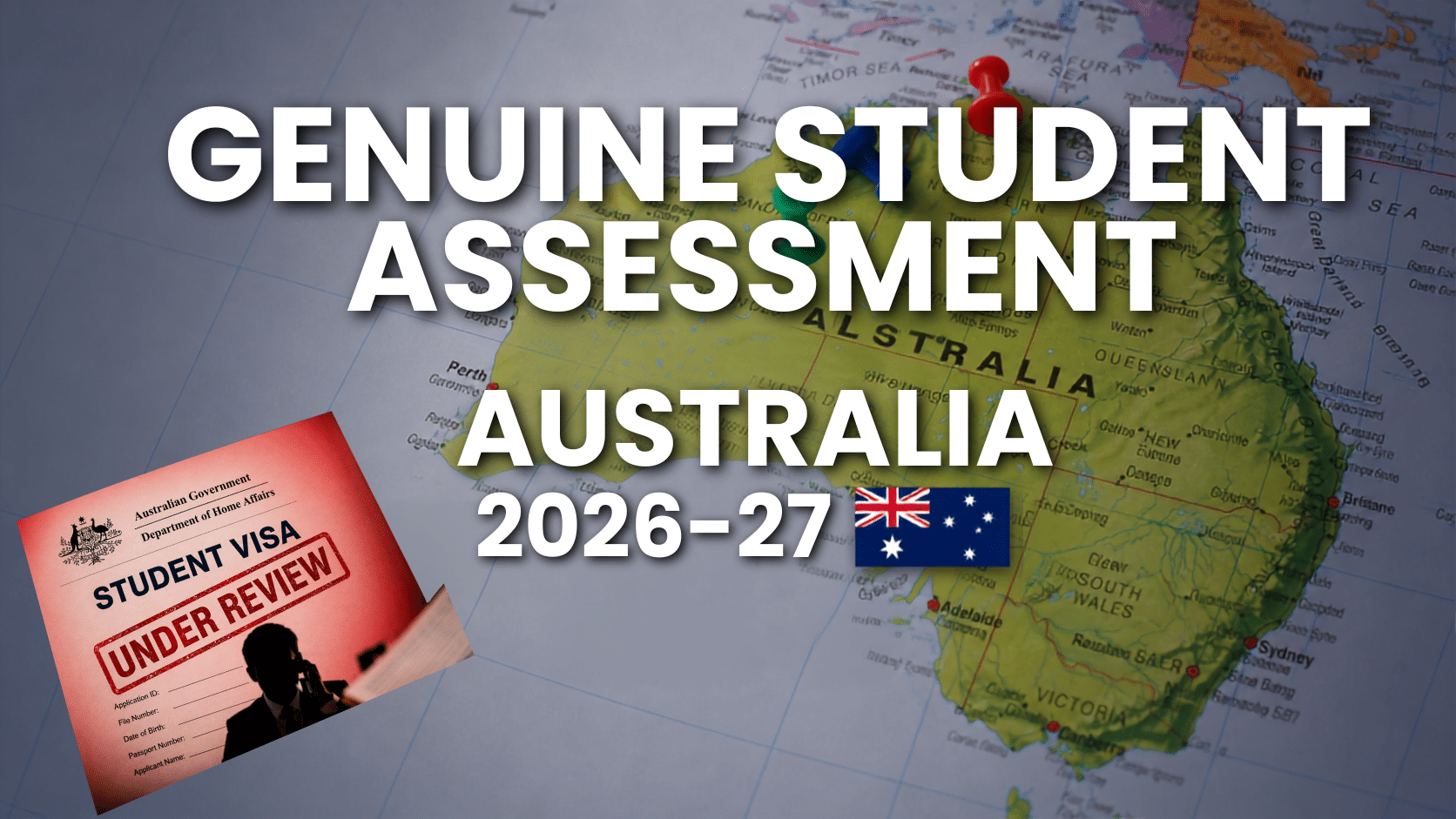
If you are planning to apply for an Australian student visa, there is a high chance you are approaching it incorrectly — and this one mistake is silently getting thousands of applications rejected every single year.
Understanding the Australia Student Visa GS Assessment is not optional. It is the difference between approval and rejection. In this guide, BBC Education breaks down exactly how GS Assessment works, how visa officers actually think, and what you must do to maximise your chances of approval.
💬 Planning to Apply for an Australia Student Visa?
Get expert guidance from BBC Education before you lodge your application.
What Is GS Assessment?
GS stands for Genuine Student Assessment. In simple terms, the Australian High Commission wants to understand two things:
- Are you a Genuine Student?
- Is studying your Real Purpose for coming to Australia?
If you can clearly demonstrate both — your chances of approval become significantly stronger.
But in reality, this has multiple layers that most students never fully understand.
What Are The 2 Stages of GS Assessment?
To get an Australian Student Visa, you must pass Two Separate Assessments:
Stage 1 — GS Assessment by the University Stage 2 — GS Assessment by the Visa Officer
Both evaluate similar factors:
- Your Personal Circumstances
- Your Genuine Reasons for Studying in Australia
- How the Course Benefits your Career
- Your Immigration History and Compliance
- Fraud Patterns Detected from your Region
You must clear BOTH STAGES. Passing one is not enough
The 3 Factors Visa Officers Assess Most Carefully
Factor 1 – Return Prospects
One of the first questions a visa officer asks is: “Will this Student Realistically Return Home after Graduation?”
If you are from a country or region with limited job opportunities, political instability, or economic uncertainty — a visa officer may assume you are using the student visa as a migration pathway rather than a genuine education opportunity.
This does not mean your application will be rejected. But it does mean you must clearly and specifically explain:
- Your career plan after graduation
- Why Australia’s education is relevant to that plan
- What you intend to do after your Post Study Work Visa
Vague answers are not enough. You must be specific. You must be logical.
Factor 2 – Financial Viability
This is where most students make a critical mistake. Meeting the minimum financial requirement is not enough.
Here is why: currency fluctuations are real. If the Indian Rupee depreciates against the Australian Dollar — and your funds barely meet the minimum requirement — a visa officer will question whether you have sufficient financial buffer to complete your studies.
Key principles:
- Your education costs should be largely available — not entirely dependent on a loan
- Only a small portion of your study cost should come from an education loan
- Show your own funds wherever possible
- Always maintain a meaningful financial buffer above the minimum requirement
Factor 3 – Country Evidence Level
This is something most students have absolutely no idea about — and it directly shapes how your application is assessed before an officer even reads your file.
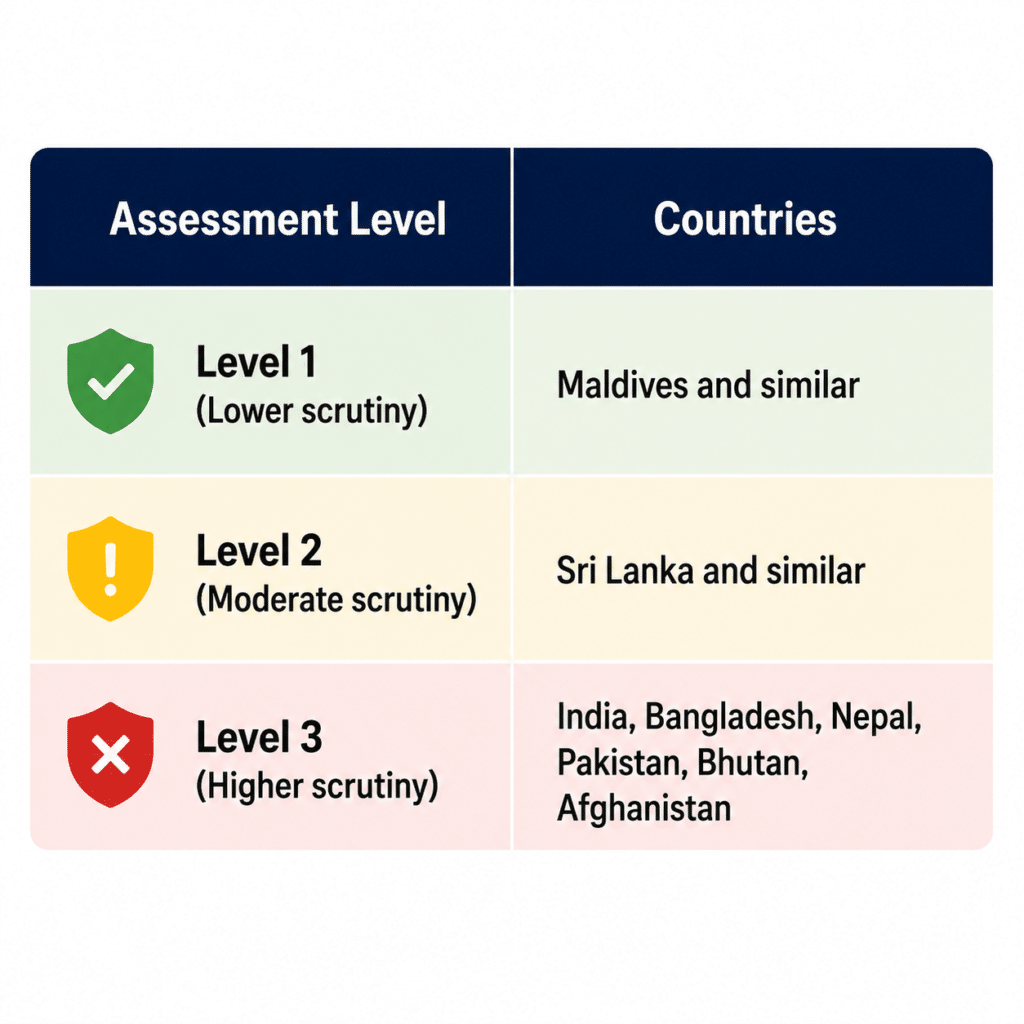
As of January 2026, Australia’s Department of Home Affairs categorises countries into assessment levels:
If you are from a Level 3 country — including India — your application receives significantly more scrutiny.
Your financial documents, English evidence, academic background, and overall GS story all need to be very strong. And here is something many Indian students do not realise: even within India, your region matters.
The Australian High Commission applies different assessment approaches based on regional patterns. Students from states with historically higher visa non-compliance may face additional scrutiny compared to students from other regions.
🚀 Get Your Application Right the First Time
BBC Education works with students from India and across South Asia to prepare strong, well-structured Australia student visa applications — with a clear GS story, robust financial evidence, and a career narrative that visa officers find credible.
Don’t leave your visa approval to chance.
FAQ SECTION:
Q1: What is GS Assessment for an Australia student visa?
GS Assessment — Genuine Student Assessment — is the process by which both the university and the Australian visa officer evaluate whether you are a genuine student with a real intention to study in Australia. You must pass two separate stages of GS Assessment to receive your student visa. Most rejections happen because students do not understand how this assessment actually works — and fail to present their case effectively at one or both stages.
Q2: How does my country’s assessment level affect my Australia student visa?
Australia’s Department of Home Affairs categorises countries into assessment levels that determine how much scrutiny your application receives. As of 2026, India falls under Level 3 — meaning Indian applicants face higher scrutiny on financial documents, English evidence, academic background, and their overall GS story. Understanding your assessment level is critical to preparing a strong application. Contact BBC Education for guidance specific to your profile and region.
Q3: How much money do I need to show for an Australia student visa?
Meeting the minimum financial requirement is not enough. Visa officers also consider currency fluctuations and whether you have a sufficient financial buffer above the minimum. Ideally, your education costs should be largely available through your own or your family’s funds — with only a small portion coming from an education loan. BBC Education can help you structure your financial documentation correctly for your specific situation.
Q4: What should I include in my GS story to improve my chances of approval?
Your GS story must clearly explain why you want to study in Australia, how the specific course benefits your career, and what your realistic plan is after graduation — including whether you plan to use your Post Study Work Visa and what you intend to do after that. Vague or generic answers significantly reduce your chances. BBC Education helps students craft specific, logical, and credible GS narratives tailored to their individual profile and assessment level.
———————————————————-
DISCLAIMER
This article has been prepared by BBC Education Consultants. The information provided is for general guidance purposes. Visa requirements, assessment criteria, and eligibility conditions are subject to change by the Australian Department of Home Affairs at any time. For personalised advice specific to your profile, we recommend booking a direct consultation
with our team.