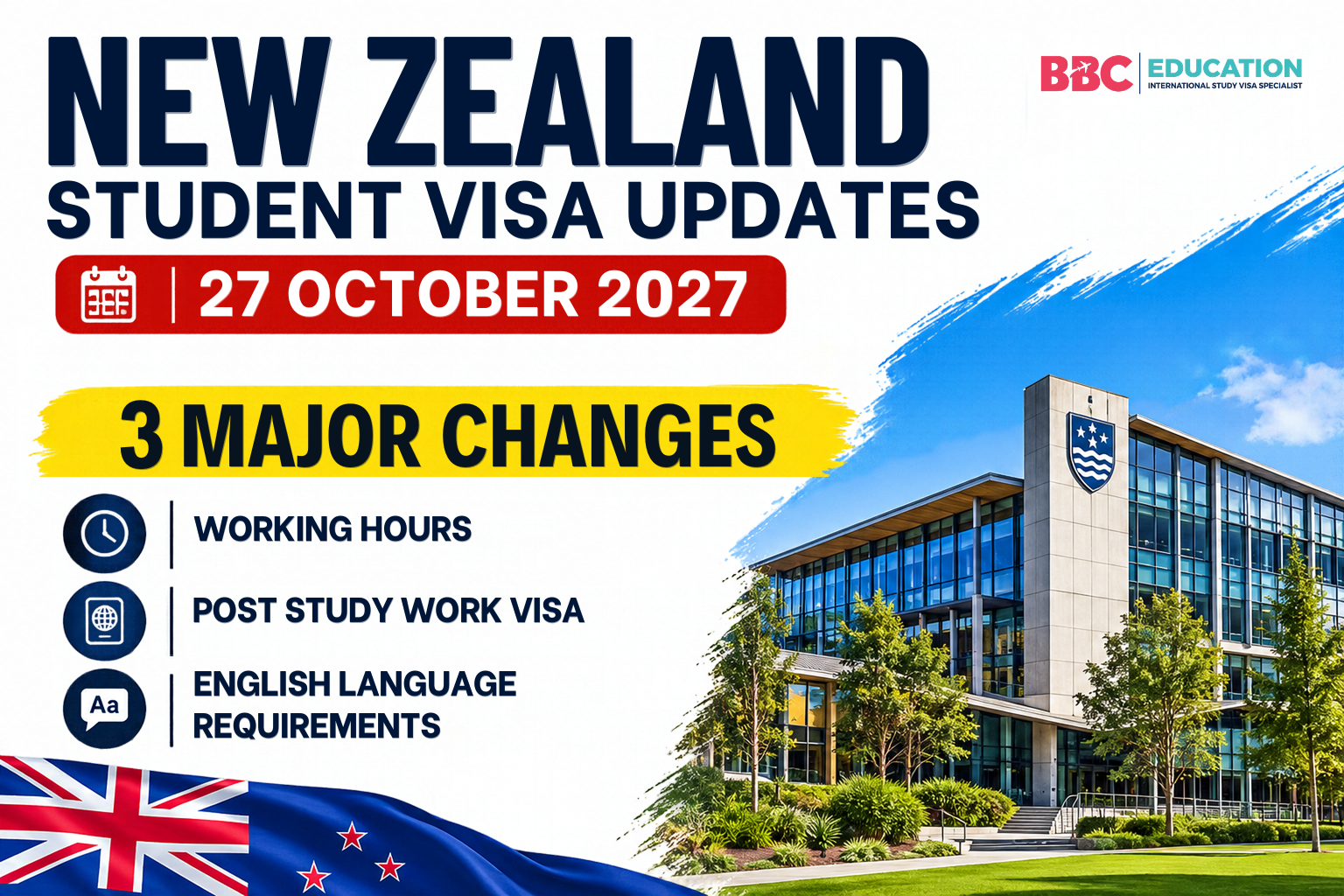
Planning to Study in New Zealand? Several New Zealand Student Visa Updates take effect from 27 October 2026, and they affect how much you can Work, how your English is Judged, what happens if your Education Provider is under Scrutiny, and how long you can stay after your course ends. Immigration New Zealand (INZ) says it is making three changes to protect the integrity of Student Visas, plus a fourth change to help students after they finish their course.
This guide explains each of these New Zealand Student Visa Updates in plain language, what it means for your plans, and what you can do about it now. You can read the original announcement on the INZ website.
1. Master's by Research: Unlimited Work Rights Have Been Removed!!!
One of the significant changes concerns International Students enrolling in Master’s programmes. Previously, new Master’s-by-Research Students could receive unlimited in-Study Work Rights under the applicable Student Visa conditions. Immigration New Zealand has now removed this provision.
Under the new rules:
25 Hours
New Master's Students will get permission to work upto 25 hrs/week during their studies.
Weeked Working
They can Work Full-Time during scheduled Holidays, subject to their Visa Conditions.
Applies To...
This applies to Student Visa Applications made on or after 27 October 2026.
This means new Master’s-by-research students will no longer automatically receive unlimited work rights simply because they are enrolled in a research-based Master’s programme.
2. English Language Ability: Greater Emphasis on Visa Compliance
Immigration New Zealand has strengthened its immigration instructions to explicitly recognise English-language ability as an important factor when determining whether a student can meet their student visa conditions.
This reinforces the importance of students having the English-Language Skills necessary to participate in their studies and comply with their visa requirements.
Does this mean IELTS or PTE score requirements have increased?
Not necessarily. The announcement does not introduce a new minimum IELTS or PTE score. Instead, it strengthens the emphasis on English-Language ability when INZ considers whether a student can meet their visa conditions.
What should prospective students do?
Choose a course that matches their academic background and language ability.
Understand the English-language requirements of their chosen institution.
Prepare for the language requirements applicable to their admission and Visa Application.
Ensure they can genuinely participate in their chosen programme.
3. More Time After Course Completion.
Immigration New Zealand is giving international students more time to decide their next steps after completing their studies.
Previously, depending on the course and duration of study, a student visa could expire either on 31 March or one month after the course completion date.
Under the new change, INZ is extending the one-month period to 2 Months after the Course Completion Date. The alternative 31 March expiry date remains unchanged.
What does this mean for International Students?
The additional month provides students with more time to plan their next move after completing their qualification.
During this period, eligible students can:
Apply for a Post Study Work Visa (PSWV) if they meet the eligibility requirements.
Explore other suitable visa options, where eligible.
Make the necessary arrangements to depart New Zealand if they do not intend to continue staying in the country.
4. Immigration New Zealand Can Suspend Student Visa Processing in More Circumstances
The third change gives Immigration New Zealand broader authority to formally suspend the processing of student visa applications in certain circumstances.
This includes situations where an education provider is being investigated for potential non-compliance, even when the determination of that non-compliance is still ongoing.
How could this affect International Students?
If an education provider is under investigation, student visa applications associated with that provider could experience processing delays or suspension.
For prospective students, this highlights the importance of carefully researching their education provider before accepting an offer or submitting a visa application.
Students should Pay Attention to:
The credibility and compliance record of their chosen institution.
The suitability of their selected programme.
The documentation provided by their education provider.
Any official communication regarding their institution or application.
Planning to Study in New Zealand? Speak to BBC Education
New Zealand continues to offer International Students opportunities to pursue higher education and gain valuable international experience. However, understanding the latest Immigration Requirements is essential before making an important investment in your education.
At BBC Education Consultants, we help students explore suitable courses, universities, admission requirements and student visa application processes.
Don’t leave your study-abroad planning to assumptions. Get the right guidance before you apply.
Frequently Asked Questions.
– How early should I start planning my New Zealand study visa application?
>>> Ideally, you should begin researching courses and education providers several months before your intended intake. This gives you time to compare universities, understand admission requirements, prepare English-language evidence, arrange finances and obtain your offer of place. You should also allow sufficient time for the student visa application and any additional documentation INZ may request. Early preparation can help avoid unnecessary last-minute complications.
– Does studying in New Zealand guarantee permanent residency?
>>> No. Studying in New Zealand does not automatically lead to permanent residency. Your eligibility for residence depends on factors such as your qualification, occupation, employment, skills and the applicable immigration pathway. Students interested in long-term settlement should research potential residence pathways before selecting their course rather than assuming that any New Zealand qualification will lead to residency.
– What happens if I cannot find a job after completing my studies in New Zealand?
>>> Completing a qualification in New Zealand does not guarantee employment or a pathway to residence. If you are eligible, you may apply for a Post Study Work Visa to gain relevant work experience and explore employment opportunities. However, if you cannot secure employment or do not qualify for another visa, you will need to consider your available immigration options and make arrangements to leave New Zealand before your lawful stay ends. Planning your career pathway before graduation can help you make informed decisions.
– Should I apply for a New Zealand student visa before or after receiving my university offer?
>>> You should first secure an offer of place from an eligible New Zealand education provider before proceeding with your student visa application. You will also need to prepare the required financial evidence, health and character documents, and other supporting information. It is important to ensure that your chosen course and institution align with your academic background and future plans. Starting the admission process early can give you sufficient time to prepare a complete visa application.
------------------------------------
DISCLAIMER
This article has been prepared by BBC Education Consultants. The information provided is for general guidance purposes only. For personalised advice specific to your profile, we recommend booking a direct consultation with our team.